The One-Counter Sequence: Prep Dinner Without Losing the Board
A small kitchen feels crowded when ingredients, scraps, and dirty tools all compete for the same board. A deliberate sequence keeps the work moving and leaves a clear place to cook.
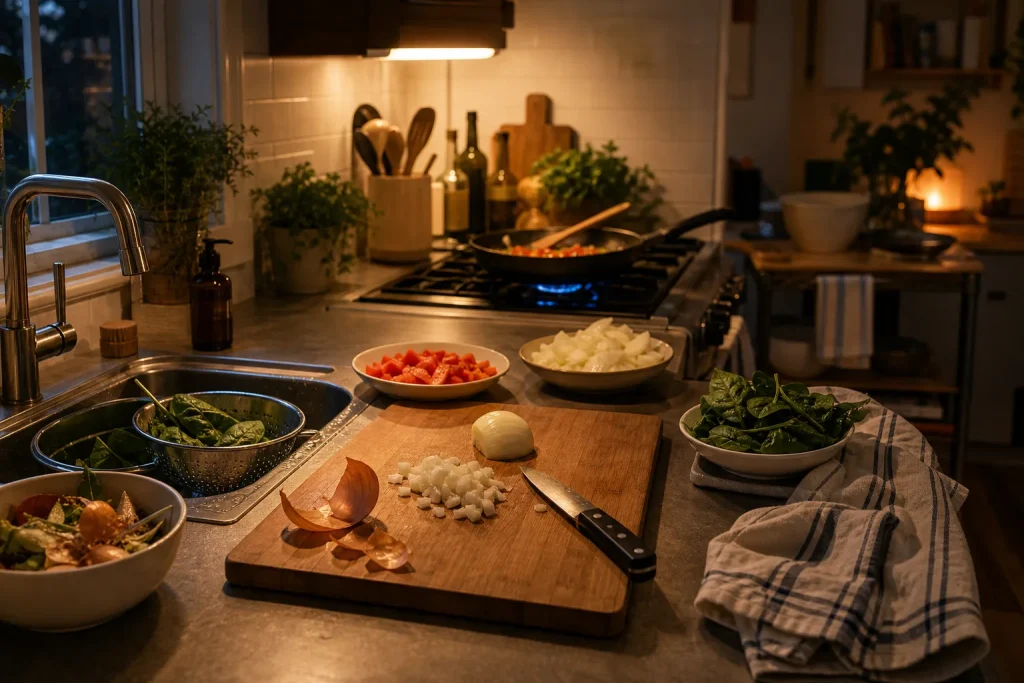
A small kitchen feels crowded when ingredients, scraps, and dirty tools all compete for the same board. A deliberate sequence keeps the work moving and leaves…
Kitchen Flow · 6 min read
The common mistake in a small kitchen is laying out every ingredient before doing anything else. A bag of greens, an onion, a cutting board, the colander, and yesterday’s mug can quickly claim the only useful surface. The cost is not just clutter: you lose the clear space needed to cut safely, set down a hot pan, or change direction when dinner calls for it. A better approach is to treat the counter as a workspace that changes hands in a planned order.
Give Each Surface a Job
Before unpacking groceries, decide what each available area can do. The counter may be the cutting station, while the sink holds rinsing work and the stovetop is reserved for cooking. A stable dining table or a cleared shelf can serve as a temporary landing place for clean ingredients or finished dishes, provided it is away from heat and out of the path through the kitchen.
This is less about making a perfect layout than preventing two tasks from demanding the same patch at once. Think of a counter like a small desk: papers waiting to be filed belong in a tray, not spread across the page you are trying to write on. In the kitchen, a bowl can gather scraps, and a clean plate can hold ingredients that are ready to cook. Neither needs to remain there after its job is done.
Start With the Wet Work
Rinse produce before the board becomes busy. Wash the greens in a colander, rinse herbs, and clean any vegetables that need it. Let them drain in the sink while you clear away packaging and return unused items to storage. If an ingredient needs to dry before slicing, place it on a clean towel in a spot that will not block the board.
Doing wet work first keeps water from spreading into the cutting area later. It also avoids setting a dripping colander beside chopped ingredients. If the recipe includes meat or fish, keep its packaging and preparation separate from ready-to-eat produce, and wash hands and any touched surfaces before moving on. For specific food-handling questions, follow guidance from a qualified food-safety authority.
Prepare by Cooking Order
Once the board is clear and dry, prepare ingredients in the order they will be used. Start with items that take longer to cook, such as onion, carrot, or firm stems. Then cut quicker-cooking ingredients, such as leafy greens or herbs. Group each prepared ingredient in a small bowl, on a plate, or in a tidy section of the board only if it will be used soon.
That last distinction matters. Prepping everything at once can feel orderly, but bowls consume space and create extra washing. If the recipe lets you add ingredients directly to a pot, you may be able to chop one, tip it in, wipe or brush the board, and continue with the next. Keep the knife parked safely and the cutting surface stable while you clear it.
Say you are making a simple skillet supper with onion, bell pepper, and spinach. You could rinse the spinach and let it drain, chop the onion, and add it to the pan. Next, chop the pepper on the cleared board and add it when the onion has softened. The spinach can be cut last, or torn by hand, then added near the end. The expected result is a board that becomes available again between ingredients, rather than a crowded row of bowls waiting for their turn.
Make Scraps Contained
Put a small bowl or compost container beside the board before cutting. Peel and stem directly over it, then transfer scraps when it is nearly full. This prevents trimmings from spreading into the space where clean ingredients belong. Keep a separate plate or tray for usable scraps, such as clean herb stems, only when you have a planned use for them.
Do not let the scrap bowl become a second storage system. If it fills, empty it into the compost or trash and return it to its place. A quick rinse of the board between tasks is often enough for ordinary produce; if raw animal products have touched a surface, clean it thoroughly before it is used again. When in doubt about safe handling, use current advice from a qualified professional or public health authority.
Clear While Heat Works
When the pot or pan is doing its work, use a brief pause to reclaim the counter. Put unused ingredients away, move dirty bowls to the sink, and wash the knife and board if they are no longer needed. Keep the dish towel dry and within reach, but not draped near a burner. Leave a clear landing spot for a utensil or a warm dish rather than filling every gap with cleanup tasks.
There is no need to wash everything while dinner cooks. Prioritize what blocks the next action: a colander taking up the board, a bowl needed for serving, or a knife that would otherwise be left under other items. The aim is a usable surface, not a spotless kitchen before the meal is served.
Adjust for the Recipe
Some meals do not allow a neat one-at-a-time rhythm. A recipe may call for several ingredients to enter the pan together, or a delicate item may need to be ready before cooking starts. In that case, choose the smallest number of temporary containers that keep ingredients distinct and within reach. A shallow plate can hold several items if they will be added together; separate bowls make more sense when timing or cross-contact requires separation.
Look for ingredients that can be prepared without occupying the board. Tear soft greens by hand over a bowl, measure spices onto a small plate, or use kitchen shears for herbs if that suits the dish. These alternatives should simplify the sequence, not create another tool to clean. If a container is already clean and useful, put it to work; if it adds a step without clearing space, skip it.
Reset for Serving
Before the food is ready, decide where the serving dish will go and clear that landing place. Move the board to the sink or a safe drying area, wipe the counter, and set out only what the meal needs. When the pan comes off the heat, you will have somewhere to place it without balancing it on top of ingredients or a stack of dishes.
A one-counter kitchen works best when the surface is treated as a sequence of stations, not a shelf for every part of dinner. Rinse first, cut in cooking order, contain scraps, and clear the next needed space while the food cooks. The useful habit is to ask, before each new task, what must leave the counter so the next action can happen safely and comfortably.