The Lidded Pot Supper: Barley, Mushrooms, and Greens
A small-kitchen supper shows how to layer pearled barley, cremini mushrooms, and baby spinach in one lidded pot, then handle leftovers with care.
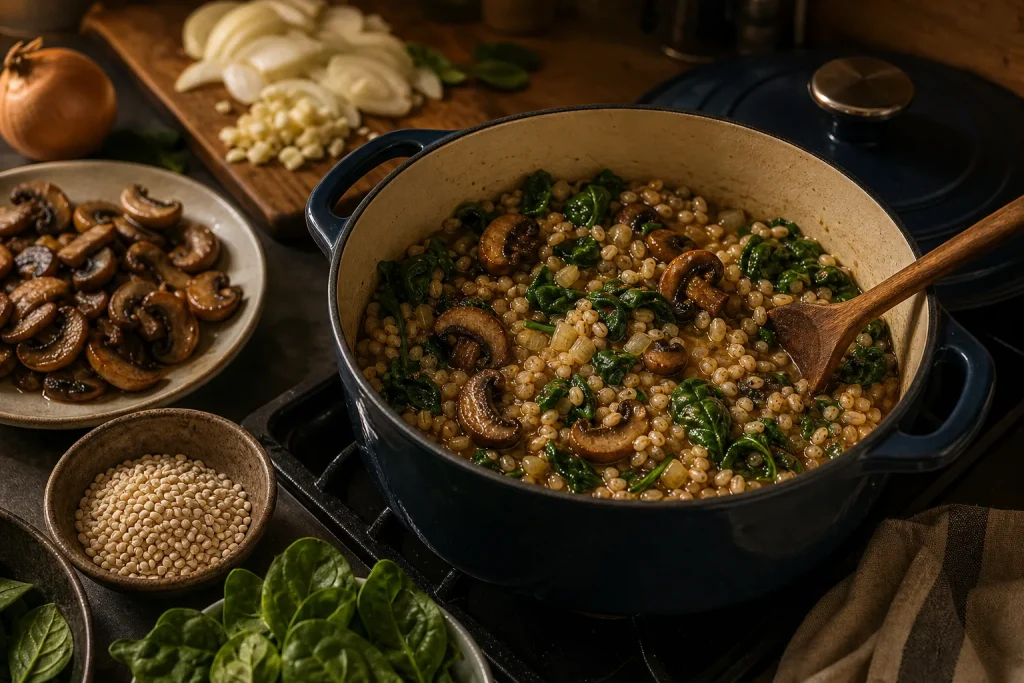
A small-kitchen supper shows how to layer pearled barley, cremini mushrooms, and baby spinach in one lidded pot, then handle leftovers with care.
One-Pot Meals · 6 min read
The common mistake with a one-pot barley supper is adding every ingredient at once. Mushrooms simmer instead of browning, spinach collapses before the barley is tender, and the pot turns into a stew with uneven textures. A better sequence lets each ingredient enter when the pot can make use of it—and leaves a clear patch of counter for a plate.
Imagine you have one burner, a medium Dutch oven, a small cutting board, pearled barley, cremini mushrooms, and baby spinach. This is an invented situation, not a cooking test. The goal is a bowl with tender, slightly chewy grains, browned mushrooms, and spinach that has wilted without disappearing into the broth.
Set Up the Pot
Choose a heavy pot with a lid that fits securely. A Dutch oven works well, but a deep saucepan with a thick base can also do the job if it has room for the barley to expand. A thinner pot may develop hot spots, so stir gently and check the bottom as the liquid comes to a simmer.
Set out barley, mushrooms, an onion or a few scallions, garlic, broth or water, and baby spinach. Keep oil, salt, black pepper, and lemon juice or vinegar nearby. A spoon and a small plate for the mushrooms are enough; there is no need to fill the counter with prep bowls.
Check the barley package before you start. Pearled barley generally cooks sooner than hulled barley, so use the package directions as a guide. Rinse the grains in a fine-mesh strainer, or swish them in a bowl of water and pour off the cloudy water carefully. Drain well.
Brown the Mushrooms
Brush visible soil from the mushrooms or wipe them with a damp towel. Cut them into similarly sized pieces. Slice the onion and garlic while the cutting board is out; leave the spinach whole or roughly torn until later.
Warm a thin film of oil in the uncovered pot over medium-high heat. Add the mushrooms in a loose layer. If the pot is too crowded, cook them in batches and set each batch on the plate. Let them take on color before stirring frequently. When the surfaces look browned and most of the released liquid has cooked away, transfer them to the plate.
Lower the heat to medium. Add the onion, with a little more oil if the pot looks dry, and stir until it softens. Add the garlic near the end. If browned bits cling to the bottom, splash in a little broth or water and scrape with a wooden spoon. If the residue is blackening, lower the heat rather than scraping burnt material into the meal.
Simmer the Barley
Stir the drained barley into the onion and garlic. Add broth or water in the amount indicated by the package directions, then season lightly. If the broth is salted, use less added salt at first; you can adjust after cooking. Bring the liquid to a gentle simmer, cover the pot, and lower the heat.
Check that the liquid is barely bubbling and stir occasionally, especially if the pot is thin or the burner runs hot. If the surface looks dry while the grains remain firm, add a small splash of hot water or broth, cover, and continue cooking. Taste a few grains to judge doneness: they should be tender with a slight chew, not hard in the center.
Think of the covered pot like a closed lunchbox: it keeps everything together, but it does not make every ingredient ready at the same time. Barley needs sustained heat; baby spinach needs only a brief finish.
Add Spinach Late
When the barley is nearly tender, return the mushrooms to the pot and stir them through. Check the liquid. If the barley is still firm and the pot is dry, add a small splash of hot liquid and cover again. If the grains are nearly ready but there is more liquid than you want, simmer uncovered briefly.
Lower the heat and fold in the spinach at the end. Cover the pot briefly, then stir and inspect. The leaves should wilt and turn glossy while retaining some shape. If the barley is still firm, continue cooking it with a little liquid before adding the spinach; do not leave the leaves simmering for the whole remaining cook.
Say the imagined cook starts with one cup of pearled barley, a handful of sliced cremini mushrooms, a small onion, garlic, broth, and a handful of baby spinach. They brown the mushrooms in the Dutch oven and set them aside, soften the onion and garlic, then add the rinsed barley and package-directed amount of broth. They cover and simmer, tasting a grain when it appears close to tender. If its center is still firm and the pot is nearly dry, they add a small splash of hot broth and cover again. Once the grain is tender with a slight chew, they return the mushrooms, fold in the spinach, and turn off the heat after the leaves wilt. The resulting bowl should have distinct grains, browned mushroom edges, and soft green leaves. The tradeoff is simple: a little more time for firm barley, or less time under heat for spinach that keeps its shape.
Finish and Serve
When the barley is tender, turn off the heat and taste the grains and liquid together. Adjust salt and pepper, then add lemon juice or vinegar gradually, tasting as you go. If the pot seems too thick, loosen it with hot water or broth. If it seems too loose, leave the lid off briefly and stir once while some liquid absorbs.
Divide the barley, mushrooms, and spinach among bowls, including some of the savory liquid in each. Serving from the pot avoids transferring the meal to another dish just to bring it to the table. Before serving, check that no dry patch is stuck to the bottom; use a wooden spoon to loosen food gently.
Handle Leftovers Safely
For leftovers, follow your local food-safety guidance rather than leaving the pot on the counter until it feels cool. Transfer the barley mixture into shallow, covered containers so it can cool promptly, then refrigerate it. If you are unsure how long cooked food can be kept or whether it has been handled safely, consult your local public-health guidance or a qualified food-safety professional.
Reheat only the portion you plan to eat, stirring it and adding a splash of water or broth if the barley has thickened. Heat it until steaming throughout, then check that the center is hot before serving. If it has an unusual odor, appearance, or uncertain storage history, discard it rather than trying to make it seem fresh by reheating.
If the greens soften further after reheating, that is a texture change, not a reason to extend the heating. Add fresh spinach to the bowl after warming, if you have some and want a firmer green finish.
A little more to cook with
Wood, Iron, and Supper: Keeping a Survival Crew Supplied
Four players reach their riverside shelter with thirty logs, six iron ore, eight meals, and almost…
Sunday’s Cooked Beans, Tuesday’s Fast Bowl
A small batch of cooked beans can make a weeknight bowl feel nearly assembled. Cook them…