Sunday’s Cooked Beans, Tuesday’s Fast Bowl
A small batch of cooked beans can make a weeknight bowl feel nearly assembled. Cook them until tender, cool and store them safely, then finish Tuesday’s portion with a few fresh ingredients and a skillet.
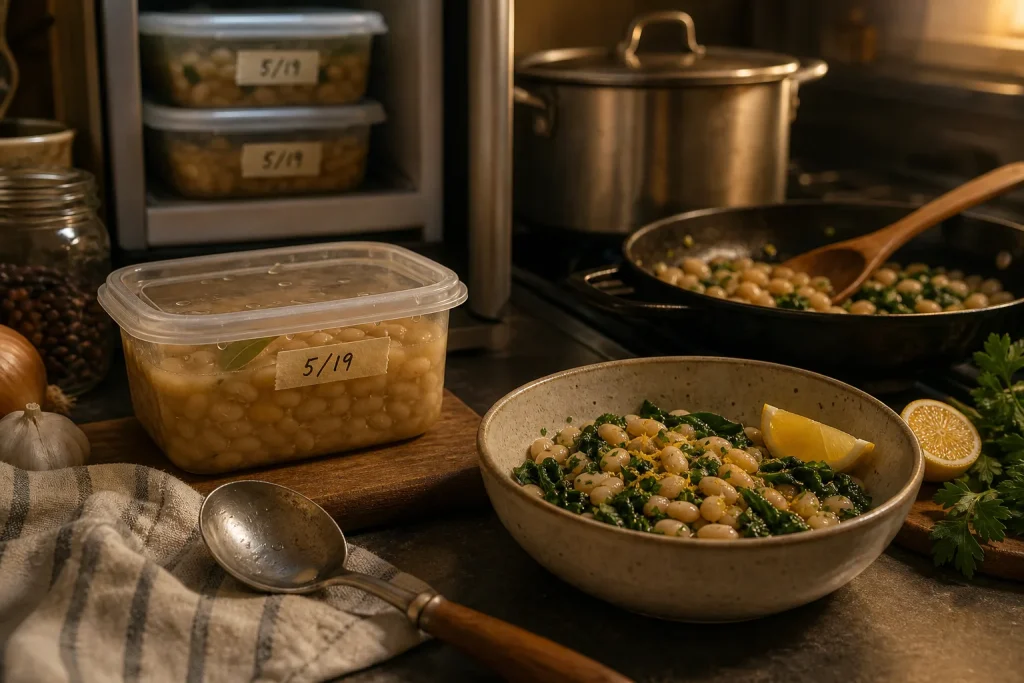
A small batch of cooked beans can make a weeknight bowl feel nearly assembled. Cook them until tender, cool and store them safely, then finish Tuesday’s…
Make Ahead · 8 min read
The common mistake is cooking a large pot of beans on Sunday without deciding how it will fit into the week. By Tuesday, the container may be hard to reach, the beans may be too dry to use as planned, or the cook may be unsure how long they have been stored. A modest, well-labeled batch costs less space and gives you a clearer route to a fast dinner.
The aim is not to prepare Tuesday’s entire meal in advance. Cook beans until tender, store them with enough liquid to stay supple, and keep the final bowl flexible. A saucepan, a lidded storage container, and a skillet are usually enough. The bowl can take on lemon and herbs one night, or warm spices and greens the next, without asking you to reserve a second counter for elaborate prep.
Choose a useful batch
Start by choosing a bean that suits the kind of bowl you like. Small white beans become creamy and work well with olive oil, greens, and a sharp finish. Cannellini beans hold their shape in a tomato-tinged bowl. Black beans pair naturally with rice, corn, or a spoonful of salsa. If your pantry already holds a bag of beans, use that rather than buying ingredients for a single plan.
For a small kitchen, a moderate batch is easier to cool and store than a very large pot. Think about the containers available before you start: a shallow, lidded container can cool food more evenly than a deep, crowded one, while a jar with a wide mouth can make a compact serving easy to scoop. Leave room in the refrigerator for the container before cooking; a good plan should not depend on rearranging every shelf at bedtime.
Dried beans need enough time to become fully tender. If you soak them, cover them with plenty of water in a bowl or pot and refrigerate them during the soak. If you skip soaking, allow for a longer simmer and check the pot as it cooks. The exact timing depends on the bean, its age, and how it has been stored, so tenderness matters more than the clock.
Drain and rinse canned beans if you are using them instead. They do not need Sunday’s cooking session, but they can still serve the same weeknight purpose: put a portion in a covered container with a little fresh water or broth, then use it promptly. Keep this article’s routine focused on cooked dried beans, though. Their texture and cooking liquid give you more control over the finished bowl.
Sunday’s gentle simmer
Put the soaked beans in a pot and cover them with fresh water. Add aromatics if you have them: a halved onion, a peeled garlic clove, a bay leaf, or a strip of lemon peel. A modest amount of salt is useful for seasoning the beans as they cook. Bring the pot to a boil, then lower the heat to a steady simmer. Keep the lid partly on if your stove tends to evaporate liquid quickly.
A small burner can make a rolling boil harder to manage, so use the lowest heat that maintains gentle movement in the water. Stir occasionally and add hot water if the beans begin to sit above the liquid. Avoid rushing them at a hard boil; split skins and unevenly tender centers make a less pleasant bowl. Start checking when the beans have softened, then continue until one is creamy inside rather than chalky or firm.
When they are ready, taste a bean before seasoning further. Remove spent aromatics if you prefer, but do not automatically pour away all the cooking liquid. It carries flavor and helps keep the beans moist. Transfer beans and some liquid to shallow containers, dividing them into modest portions rather than packing them into one deep mass. Refrigerate cooked beans promptly; do not leave the pot at room temperature to cool. Use clean utensils when portioning, and keep the refrigerator at or below 40°F.
For safer cooling, divide the beans and liquid into shallow containers and place them in the refrigerator promptly, even while still warm. Do not wait for a large pot to reach room temperature. Keep the containers loosely covered while cooling if needed, then seal them once chilled. Label each container with the cooking date. Refrigerate cooked beans for no more than three to four days; freeze portions you will not use within that window. If food has been left at room temperature for more than two hours—or more than one hour when the room is hotter than 90°F—discard it. When in doubt about how it was handled, discard it rather than relying on smell or appearance.
Monday’s small check
On Monday, take a quick look at the container before making other plans. The beans should still be covered by some liquid; if the surface looks dry, stir in a spoonful of water or broth and reseal. Check that the lid is clean and firmly fitted. This is also a good moment to decide whether Tuesday’s bowl will be crisp and bright or warm and savory, without committing to a rigid recipe.
- Check the date on the label; if the beans are within the three-to-four-day refrigerated window, plan to use them promptly, and if they are beyond it, discard them.
- Check that the refrigerator is at or below 40°F; if it is, keep the beans chilled, and if it is warmer, move them to a working refrigerator and discard them if safe cold holding cannot be confirmed.
- Check whether the beans remain covered with liquid; if they do, keep the container as is, and if they look dry, stir in a little water or broth before resealing.
- Check whether the container is shallow and the beans cooled promptly; if so, keep them refrigerated, and if a deep pot sat out for an extended time, discard the batch rather than trying to cool it afterward.
- Check whether you will use the remaining portion within the storage window; if so, leave it refrigerated, and if not, freeze it promptly in a freezer-safe container with room for expansion.
- Check whether the beans have been sitting out for more than two hours, or more than one hour in a room hotter than 90°F; if not, return them promptly to the refrigerator, and if so, discard them.
Make the choice around what is already on hand. A lemon, a handful of parsley, and leftover rice suggest one direction. A small onion, paprika, and a bag of spinach suggest another. If fresh greens are likely to wilt before you use them, keep them separate and add them only when reheating. Treat the beans like a set of plain shirts in a drawer: ready to wear, but not obliged to make every outfit look the same.
Freeze extra portions in freezer-safe containers with a little cooking liquid, leaving room for expansion. Label them with the date and thaw them in the refrigerator, or reheat directly from frozen with extra liquid in a covered pot. For detailed food-safety questions, follow current guidance from a qualified authority such as the USDA or ask a local food-safety professional.
Tuesday’s fast bowl
For a quick bowl, put a serving of beans and a splash of their liquid in a small saucepan or skillet. Warm them gently, stirring so the bottom does not catch, until they are steaming throughout. If the beans seem thick, add water or broth a little at a time. If they are soupy, let the liquid reduce briefly. The goal is a moist, spoonable base, not a precise sauce.
While they warm, prepare only the finishing ingredients. Slice a scallion, chop a little parsley, or cut a lemon wedge. If you have a clean cutting board free, halve a few cherry tomatoes; otherwise, use a spoonful of jarred salsa or a few olives. Reheat rice or another cooked grain separately if that is what you have, or serve the beans with toast. Keeping the finishing work to one or two ingredients makes the meal fit a narrow counter.
Imagine you cooked white beans on Sunday and Tuesday brings a leftover scoop of rice, half a lemon, and a few spinach leaves. Warm the beans with a splash of cooking liquid in a skillet, fold in the spinach until it wilts, and spoon the mixture over the rice. Finish with lemon juice and olive oil. The result is a soft, savory bowl with enough acidity to keep the beans from tasting flat; if it feels too rich, add more lemon, and if it is too sharp, stir in a little more bean liquid.
For a different direction, warm black beans with cumin or smoked paprika and serve them over rice with salsa. Or mash some white beans against the side of the pan, loosen them with broth, and top with a fried egg if you have a pan free. These are variations, not separate recipes to shop for. The beans provide the substantial part; the topping should respond to the contents of the refrigerator.
When plans shift
Weeknight plans change, so keep the cooked beans useful even if Tuesday’s bowl is postponed. If another dinner takes priority, return the container promptly to the refrigerator and use the beans within the three-to-four-day refrigerated window. If a portion has been left out beyond the safe time limit or handled carelessly, discard it. A flexible meal is not a reason to take risks with food safety.
Keep the cooking liquid in a separate small jar if you expect to use the beans in salads or other dishes where extra liquid would be inconvenient. Otherwise, storing the beans in their liquid is the easier default: it reduces drying and makes reheating straightforward. Before serving, drain only what the dish requires, and use the reserved liquid to loosen a mash, warm a portion, or enrich a quick soup.
For a bowl that needs more contrast, add something crunchy at the table rather than during storage: toasted breadcrumbs, sliced radish, seeds, or crisp crackers. Add tender herbs, citrus juice, and delicate greens near the end. That separation preserves their character and lets one cooked batch support more than one kind of meal. On a crowded evening, the useful accomplishment is not a fully finished dish waiting in the fridge; it is a container of tender beans that can become dinner without taking over the kitchen.
A little more to cook with
Wood, Iron, and Supper: Keeping a Survival Crew Supplied
Four players reach their riverside shelter with thirty logs, six iron ore, eight meals, and almost…
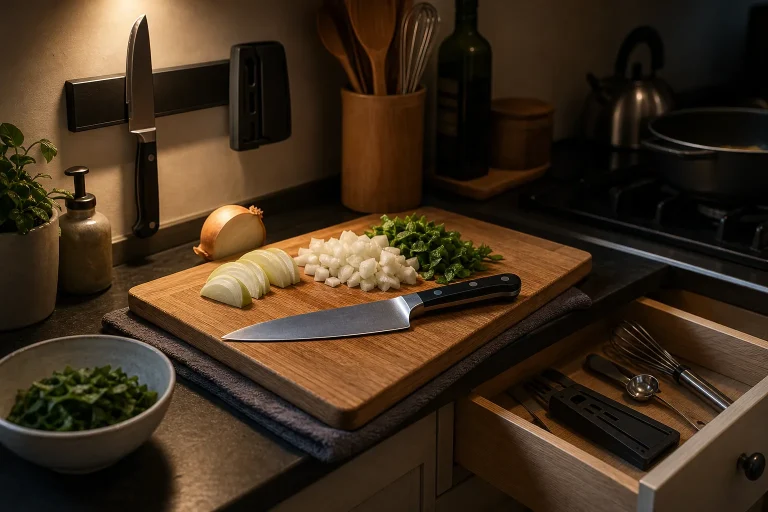
The Small-Kitchen Knife: Blade, Board, and Safe Storage
A useful everyday knife is a combination of blade, board, and storage. Choose for the work…