A Tin of Chickpeas, a Different Supper by Thursday
A tin of chickpeas can lead to several distinct weeknight suppers when you change the cooking method, seasoning, and companions—not just the garnish.
A tin of chickpeas can lead to several distinct weeknight suppers when you change the cooking method, seasoning, and companions—not just the garnish.
Pantry · 5 min read
The common mistake with a tin of chickpeas is to treat it as a finished meal: warm the beans, add whatever seasoning is handy, and call the result dinner. That saves little effort and often leaves you with the same soft, mild bowl night after night. The better move is to decide what role the chickpeas should play—crisp topping, saucy center, or sturdy filling—then choose companions that change the whole character of the meal.
Rinsing chickpeas
For most weeknight meals, drain the chickpeas in a colander and rinse them under cool water. Shake off excess water; dry them with a clean towel if you plan to roast or pan-crisp them.
You can keep the liquid, called aquafaba, for another use, but there is no need to build dinner around it. Rinsing gives the beans a more neutral starting point, especially in a delicate dish.
Changing the meal
Change more than the spice blend. A chickpea’s texture and its companions matter just as much. Crisped beans with lemon and leafy greens feel unlike tender beans simmered in tomatoes, even though both start from the same pantry shelf. Think of the chickpea as a plain notebook: its contents change with what you write beside it.
For a bright, crisp supper, pat the beans dry and cook them in a skillet with a little oil until the skins begin to brown. Add cumin or smoked paprika near the end, then finish with lemon. Serve them over chopped cucumbers and greens, with yogurt or a spoonful of tahini if you have it.
For something soft and saucy, warm the beans with canned tomatoes, garlic, and a pinch of chili flakes. Let the tomato liquid thicken around them, then stir in spinach or another tender green. Spoon the mixture over toast, rice, or a baked potato. The tomato base does most of the work; the chickpeas make it a meal.
For a compact supper, lightly mash some drained beans with a fork, then mix them with chopped scallions, mustard, and a little mayonnaise or olive oil. The result can fill a pita, top toast, or sit beside sliced vegetables. Leave some beans whole for a more varied texture.
Choosing vegetables
Choose vegetables according to how much cooking time and space you have. Tender greens can wilt in a hot pan at the end. Mushrooms and sliced peppers can cook alongside chickpeas in a skillet. Cucumbers, tomatoes, and shredded cabbage need no cooking, making them useful when the stovetop is already occupied.
Use what is already open before buying a special companion. Half a red onion can bring sharpness to a lemony bowl; a spoonful of jarred roasted peppers can add sweetness to a tomato sauce; frozen peas can turn warm chickpeas into a gentler, greener dish. Keep additions modest. In a small kitchen, fewer ingredients mean fewer containers and less clearing away.
Seasoning with purpose
Use a small set of flavors that point in different directions. Lemon, garlic, and parsley make a fresh, sharp combination. Cumin, coriander, and chili suggest a warmer, earthier one. Soy sauce, ginger, and a little vinegar make chickpeas fit a quick skillet with cabbage or leftover rice.
Add seasonings at the moment that suits them. Garlic and dried spices can go into warm oil briefly, but watch the pan so they do not scorch. Lemon juice, vinegar, and fresh herbs are better stirred in near the end, where their flavor stays clear. Taste before adding salt, especially if your companions include feta, olives, soy sauce, or a salty condiment.
Using one pan
A skillet or small saucepan is enough for many of these meals. Cook the strongest flavor first, add the chickpeas, then finish with a vegetable or bright seasoning. If the pan is crowded, the beans will soften rather than brown; that suits a saucy dish, but not a crisp finish.
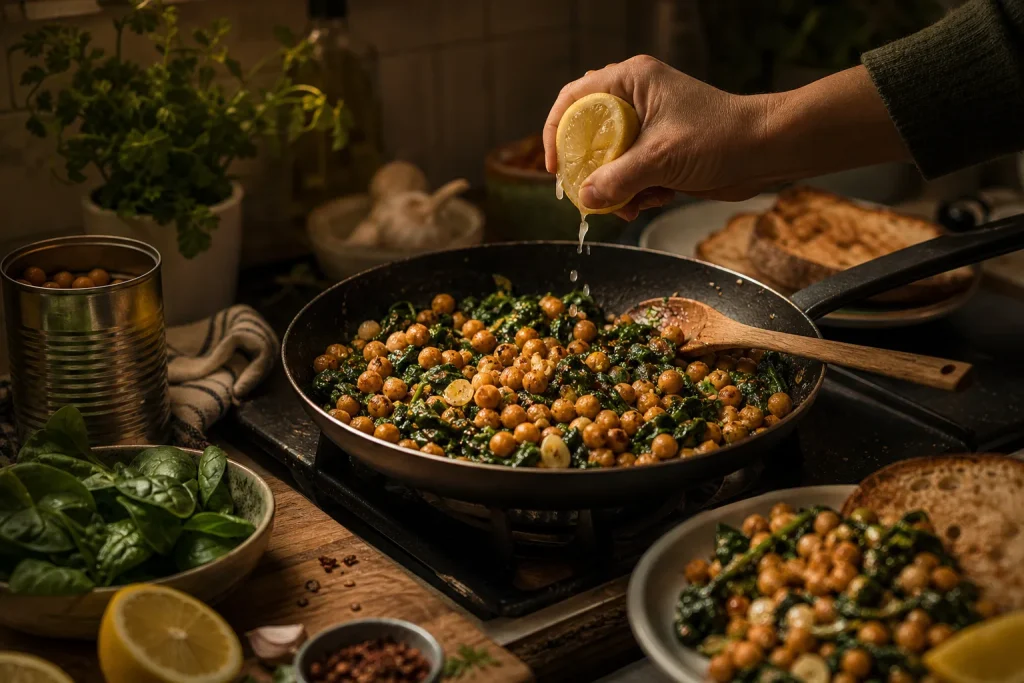
Say you have a tin of chickpeas, a handful of spinach, and a lemon. Warm sliced garlic in oil, add the drained beans with cumin, and let them heat through. Fold in the spinach until it wilts, then squeeze lemon over the pan and serve with toast. The result is a warm, lemony supper with enough contrast to feel distinct from beans in tomato sauce, without requiring another cooking vessel.
Pairing a simple side
Choose a base that fits the sauce and the appetite. Toast catches a thick tomato mixture; rice or couscous works with spiced beans; warm flatbread makes a useful scoop for a dry skillet. If counter space is tight, skip an elaborate side. Sliced vegetables or dressed greens provide freshness without turning dinner into a second recipe.
For a lighter plate, use fewer chickpeas and more crunchy vegetables, then add a simple dressing of olive oil and vinegar. For a heartier plate, pair the beans with bread or a grain. Decide whether the chickpeas are the center of the meal or one part of it, then keep the seasoning and portions in line with that choice.
Storing leftovers safely
For cooked chickpeas and other leftovers, follow the U.S. Department of Agriculture’s general guidance: refrigerate them within two hours of cooking or serving, sooner if they have been sitting in a hot environment, and use refrigerated leftovers within three to four days. Keep the refrigerator at 40°F or below. Store the food in a covered, shallow container so it cools promptly, and reheat leftovers to 165°F. If you are unsure how long food has been out or whether it stayed cold, discard it rather than tasting it to decide.
Keep crisp toppings separate from wet ingredients when possible, since moisture softens them. A saucy preparation is often simpler to reheat than crisped beans. For example, say you cook chickpeas with tomatoes on Monday evening and refrigerate the leftovers promptly in a shallow, covered container. If they have stayed at or below 40°F, use them by Thursday evening; reheat the portion until it reaches 165°F. If you cannot confirm that they were kept cold, discard them instead. The practical tradeoff is clear: a little care with storage preserves a later meal, while uncertainty calls for choosing something else.
When you open the tin, consider dividing the beans before seasoning if you want two different meals. Keep the unseasoned portion covered and chilled under the same leftover guidance, and use it within that window. One portion can become tonight’s crisp skillet; the other can turn into a saucy bowl without making the next meal taste like a rerun.
A little more to cook with
Wood, Iron, and Supper: Keeping a Survival Crew Supplied
Four players reach their riverside shelter with thirty logs, six iron ore, eight meals, and almost…
Sunday’s Cooked Beans, Tuesday’s Fast Bowl
A small batch of cooked beans can make a weeknight bowl feel nearly assembled. Cook them…